My Top 5 Fasting Books

I’ve been reading about and practicing Intermittent Fasting for about two years now. Fasting is something that came naturally as a kid–you eat your three small meals a day, and nothing in between. (Yes, I’m THAT old.) I didn’t struggle with my weight until I was age 10, we moved out into the country, and there wasn’t much for me to do except stay in the house and eat. I gained an astonishing 70 pounds in six months.

It has been a challenge to keep my weight in the reasonable ranges ever since.


Photo by Diabetesmagazijn.nl on Pexels.com

A little family history: my family of origin is rife with Type 2 Diabetics. Parents, siblings, aunts, uncles, grandparents. Many are overweight. Many eat pasta (the Italian side) and many eat potatoes (the Pennsylvania Dutch side) liberally. While pregnant with baby #4, I was given a diagnosis of Gestational Diabetes. At some point, my medical team told me that I would likely develop full on Type 2 within five years of the diagnosis. The docs were pretty certain I was going to be one of those statistics.

No thank you. No way, no how. I had to do something to stay out of that statistic. I didn’t want to be part of the typical group–I’ve always liked to “blow the curve” by having results better than the norm. Just one of those personality characteristics, I guess.

So, I took what seemed like a fail-safe route a few years back. I joined a commercial diet program that included a coach and pre-packaged meals. I worked hard for a year. I ate six times a day. I bought boxes and boxes of meal replacements.

My success was phenomenal.

Until it wasn’t.

We had moved from city to country (notice a trend here?) and I had started a very stressful job that required 24/7 attention. I developed a craving for fattier foods. Soon afterwards, I developed anemia, discovered I had a severe Vitamin D deficiency. I had a few other abnormal labs, too. Enough to make me wonder what the heck was going on with my body. And the weight started coming back. Not all of it, but much more than I ever hoped to see again.

I knew about ketosis, because the meal replacements I used were designed to help a person get into mild ketosis. Ketosis, if you haven’t been reading up on it already, is where the body relies on fat for its primary fuel, not sugar. (Not to be confused with ketoacidosis, which is a dangerous condition and should be treated immediately by medical professionals.)

I watched some videos on how to get into ketosis while eating regular foods (not the “processed chemicals” I was buying every month — my spouse had some concerns). I listened to some Podcasts. And went further with the ketosis by whole and natural foods idea. I watched Thomas DeLauer, Dr. Berry, and Dr. Boz. I looked at Keto sites, like Keto Connect and Diet Doctor.

Then I came across Dr. Jason Fung and his colleague, Megan Ramos. Dr. Fung has a pretty simple message. Just stop eating. Start fasting.

Wait, what?

It made perfect sense. And so I started devouring books to help me understand how to be successful with fasting. For the non-book-readers, you can check out The Fasting Method, which is a site led by Megan Ramos and features visits from Dr. Fung and other top professionals in this health revolution. Another helpful online resource is run by Gin Stephens on Facebook. If you do a name search, you should be able to find her support groups.

The following books are my top 5 books (in ranked order) for someone just starting out or for those who want a comprehensive and/or clear view of fasting and how it works (and yes, I’ve read them all, plus many more that didn’t hit this list):

  1. The Obesity Code by Jason Fung, MD
  2. Fast. Feast. Repeat.: The Comprehensive Guide to Delay, Don’t Deny® Intermittent Fasting by Gin Stephens
  3. Delay, Don’t Deny: Living an Intermittent Fasting Lifestyle by Gin Stephens
  4. Life in the Fasting Lane: How to Make Intermittent Fasting a Lifestyle―and Reap the Benefits of Weight Loss and Better Health by Dr. Jason Fung, Megan Ramos, and Eve Mayer
  5. The Complete Guide to Fasting (Heal Your Body Through Intermittent, Alternate-Day, and Extended Fasting) by Jason Fung, MD and Jimmy Moore

A brief rundown of each book:

The Obesity Code is the most science-oriented of all of them. You might want to listen to it, rather than read it. Dr. Fung is no-nonsense in the book. He provides clear evidence for the proposal to just “stop eating.” We don’t need to eat all day long. We weren’t designed that way. This book has template fasting schedules and also lists recommended dietary changes that go hand in hand with fasting.


Fast. Feast. Repeat. is a truly a comprehensive overview of “One Meal a Day” (OMAD) type fasting. It also includes sections on Alternate Day Fasting (ADF) which may be helpful for the more insulin resistant among us. Gin Stephens is down to earth and helpful. She reads the studies so you don’t have to (unless you want to) and has parsed it out for us.


Delay, Don’t Deny is Gin Stephens’ first book and explains how to improve your health without having to give up your favorite foods. You simply delay when you have them, and you learn quite a bit about eating windows and what not to do when it’s not time to eat. It’s a friendly, accessible book, especially for folks who are just dipping their toes in the fasting waters.


Life in the Fasting Lane feels like it was written just for me and any middle(ish) -aged woman who has struggled with emotional eating. It has the fasting, eating, and emotional components all in one book, along with helpful starting tips for those who are serious about “trying this fasting thing.” Plus I think Eve Mayer has a friendly and inspiring writing style. So this was an easy read, actually.


The Complete Guide to Fasting is a “how to” book. It’s a great book to get started, with lots of great advice from renowned fasting experts. I should note that it may have some outdated advice as to how much fat should be used as a fasting aid on fasting days. The book says up to six tablespoons of fat on a fasing day, but I’ve confirmed that The Fasting Method (and Megan Ramos) recommends up to three tablespoons of fat, and ONLY if you need it. So, Bulletproof Coffee is best used during a mealtime.


NOTE: if you are interested in fasting but scared, take a look at one of these five books. Many are in the library. The results can be transformative. At the very least, if you know what it is, you don’t have to be afraid of not eating anymore. It’s OK to go more than a few hours without a meal. Your body will not shut down.

On the contrary, after you get past some of the early days (entering ketosis), you’ll feel better than ever. That’s my experience, anyway.

And for the record, baby #4 is almost TEN years old. Mama (that’s me!) has not developed diabetes and does not have abnormal blood sugar readings. That, in and of itself, is a major win.

I’m blowing the curve. You can, too.


Challenges – Stretch Your Goals

I’m always up for a challenge. That kind of external expectation drives me forward. (Read The Four Tendencies for the description of the Obliger type individual.)

So, I typically do the Goodreads Annual Challenge, which is where you select the number of books you’d like to read in the course of a year. I’ve been participating since 2013. In seven years, I’ve only missed my book goal three times. And most were at least a “B” effort (80% or better).

Goodreads will calculate how close you are to meeting your goal, but you have to update your (now) Reading and Read lists to capture the data. That has been a fun one. For 2020, my goal was 52 (averages a book a week), and I have already hit 74 completed books. Nothing like a pandemic Stay at Home Order to increase the reading time. But I usually enjoy reading, and it is far more entertaining than the substandard fare they show on Netflix.

*For the record, we cancelled our 14 year subscription to Netflix in February 2020. JUST before lockdown. So I’m not doing Netflix for purely practical reasons. Turns out I don’t really need to know about people who kill exotic species like tigers. And I probably don’t need another Ted Bundy documentary.


Photo by Maria Orlova on Pexels.com

I am going to set another book goal for 2021 on Goodreads. At least 52, but let’s keep it reachable–especially if we’re allowed to go outside in 2021. And travel. But travel is good for reading, especially in airports and on airplanes. Trains. Passenger seats in the automobile. (Cancel that– car sickness–do Audible instead.)

I think I’ll set it for 60 books. A little stretching for the goal itself, but definitely something I can do. Especially if I add in a few kids books like the I Survived series.

Meanwhile, I’ve started a two week focused challenge on ONE book, and getting it read. I’ve done this once before with Man’s Search for Meaning by Dr. Viktor Frankl. If I hadn’t had the Two Week reading challenge, I probably would not have pushed through the second half of the book, which was the more science-y logotherapy discussion.

I like winning a challenge.

Today I started the Ready, Set, Read Challenge on the Waybetter App. (Do you remember my RunBet posts? Waybetter is the App maker, and now does running challenges on the same App.) The Reading challenge is free. Some of the other challenges are fairly inexpensive, and you win back your money if you complete the challenge. Not to mention others who play forfeit their “bet” if they don’t finish, and you collect a portion of their, well, for lack of a better word, shame money. Which is why I REALLY like to win the challenges I sign up for!

The book I’ll be reading in the next two weeks is High Performance Habits by Brendon Burchard. It’s the kind of nonfiction book I don’t usually finish, unless it’s really really relevant and insightful (like James Clear’s Atomic Habits – highly recommended!!)

Since I don’t have any money on the line for this book, I am going to read it to see if it gives me any insights into better habits for 2021. If you have a system, good habits, and a target goal, you can get to that goal. And feel great while you’re going there.


What’s Your Tendency?

I’ve been reading a book by Gretchen Rubin called The Four Tendencies. It’s a personality analysis book that helps us answer the question: “How do I respond to expectations?”

As the title suggests, there are four identified “tendencies” — with some overlap. They are (in no particular order): Upholder, Obliger, Questioner, and Rebel. Each has distinct characteristics.

What really resonated for me is that my own tendency makes perfect sense. Per the quiz in the book, I’m an “Obliger” which is someone who meets external expectations, but who has some difficulty meeting her own internally defined expectations.

I’ve known this about myself for years. It’s why I will often take a class, join a group, or commit to something (like a “StepBet”) to get things I want to get done actually completed.

This need to join a group or take a class has been challenged in 2020, because Zoom groups or classes don’t hold the same appeal for me. In fact, I’m less likely to complete an online class than anything else. Especially if the class has a “go at your own pace” philosophy.

Well, thank you for the “go at your own pace” philosophy, but that usually translates to “Nope.” If I could stay motivated going at my own pace, I wouldn’t be taking this class or signing up for this “challenge” in the first place!

But, if you put your faith in me and “count on me” — well, I will bust my behind to do what is expected.

“You can count on me, and I’m counting on you to count on me.”

— Obliger quote from The Four Tendencies

I’m working my way through the sections on how to make the awareness of this tendency work for me. It’s tough. I know I need to stretch outside my quarantine to do it.

Of course, there’s an App for that. The author has an App she has named “Better.” I’m going to go check it out. Maybe it will help me help myself. Especially in 2021. Next year can’t be as challenging as this year has been, can it? Who doesn’t want things to be ‘better’?

For those who want to cut to the chase, there are four bedrock questions you can use for a temperature check. Here they are below:

Upholders ask: Should I do this?

Questioners ask: Does this make sense?

Obligers ask: Does this matter to anyone else?

Rebels ask: Is this the person I want to be?

– From the four tendencies by gretchen rubin

In any event, this book might be beneficial to you in helping you name what your style is. It has helped me think harder on how to solve my challenges — I want to get stuff done that is important to me that may not be super important to anyone else. And that’s where the jam up is. Putting my own wants and needs above someone else’s. Very very difficult.

But doable. And I’m developing my plan. Now to have an App or a class to execute it!

What’s your tendency?


Three Books Reviewed

This last week I have been suffering from what I like to call the Dragon Flu. It’s where your derriere is draggin’. But more particularly this was a seasonal flu, and it knocked me out. I was in bed most of the time.

What’s the best thing to do if you need to rest and don’t have much energy? Why, read through a few books in between naps.

As I’ve said before, I love a good mystery. And I follow quite a few mystery series (I keep wanting to pluralize the word series! What’s the right way to say it?).

All of the books were pretty darn engaging. This isn’t always the case when it comes to a multi-book series. In fact, each of the authors who I am going to list have had good and not so good installments.

I finished three different tomes. Just in case you were wondering, I’ve listed them below.

Shadows in Death by J.D. Robb

Shadows in Death, #51 of In Death Series

Rating: 5 out of 5.

My review: Definitely a strong entry in this long running series. Lots of energy and intrigue. Interpol gets involved. We see Roarke in more pensive moments. We have a rousing ending, where we see a whole lot of cops do what cops do. Generally a good read, more engaging than most.


Gone Missing by Linda Castillo

Gone Missing, Kate Burkholder #4

Rating: 5 out of 5.

My review: this is another compelling read in an intense, disturbing, and interesting series. Kate Burkholder grew up Amish, but is now the Chief of Police in a small town. The book revolves around missing Amish teens and the investigation. Fast paced. The author does not pull any punches in this series when it comes to graphic and the gross. This is not a series for the faint-hearted. I learn something every time. And so far I like Kate and her state agent counterpart, John Tomasetti. I am always rooting for them to solve the horrible crime(s).


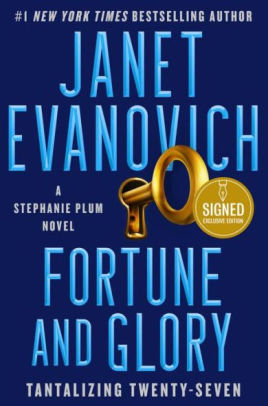
Fortune and Glory by Janet Evanovich

Fortune and Glory, Stephanie Plum #27

Rating: 4 out of 5.

My review: An easy read in this long running series. A new character is introduced, and there are some shifts in plot type, which I enjoyed.


Book Review – Man’s Search for Meaning

Man’s Search for Meaning on Amazon

This was a thought-provoking book. The first half was quite compelling. It describes the author’s experience in concentration camps during WWII. There were some fascinating insights into how people cope with abnormal times.

My reason for a four star rating is that I am perhaps a little too dense to understand parts of the second half, where the author discusses logotherapy and applying it.

I would recommend this book to anyone seeking some understanding of suffering and how humans need to have a purpose. It is also a good read for those who are coping with PTSD. I will probably read this book again, which is atypical for me. Quite often I am a “one and done” reader, but here, it seems there are enough insights and observations worth reviewing again.

Rating: 4 out of 5.


Bookshelf Update – December 2, 2020

Tonight I’m working my way through what is typically a quick read for me. I’m reading Fortune and Glory by Janet Evanovich. This is book twenty seven in a series about the quirky Stephanie Plum, a woman who works as a bail bondsman or bounty hunter in New Jersey.

When I first started the series, it was decidedly funny and there were lots of surprises. This particular volume is, so far, an easy read.

But I do find I’m getting a little grumpy with Stephanie’s apparent lack of character growth. Maybe this will change. But for the moment, it’s the one thing that’s bugging me about the book. Maybe it’s because of the other book I’m actively reading at the moment.

I’m nearly done with Viktor Frankl’s Man’s Search for Meaning. The first half was a fast read. I slowed down quite a bit in the second half, as it is a discussion of logotherapy. I’m not a psychologist or psychiatrist — just a layperson who founds psychology interesting. I note I am going back and forth a bit to make sure I understand the concepts raised.


I did finish Murder’s No Votive Confidence by Christin Brecher earlier this week, and I will be posting a review of the book soon!


What are you reading this week?


Website Powered by WordPress.com.

Up ↑