Thoughts on Russian Literature

It’s amazing what meeting new people can spark in our thinking. Recently I met a group of folks who are “into” Russian literature. I put quotes around the word “into” because it’s unusual, but also unlikely that being into Russian literature means going all the way down the rabbit hole and swimming in the well of the Russian Soul. Whatever that means. But I digress.

Being into Russian Literature in the United States means knowing who Dostoevsky was and secretly admiring the person who says they read Crime and Punishment and that it became their favorite book. Or perhaps being into Russian Literature means reading Anna Karenina because Oprah recommended it.  Perhaps it means consuming Tolstoy and blinchiki in some rainy café in New York. Or drinking tea and nibbling ponchiki while reading Turgenev and thinking about Nihilism.

These are all well and good, and generally, unusual practices.

But being into Russian Literature might also mean reading Bulgakov or Gogol or maybe even understanding that Pushkin is much more highly regarded than almost any classic author in Russia, primarily because of his poetry. Americans, as a rule, don’t have any idea who Pushkin was or why his poems and short stories are remarkable and beloved by many native Russian speakers. Being into Russian Literature might include a survey of Silver Age poets and imagining what life might have been like, surrounded by poets like Blok, Mandelshtam, Tsvetayeva, and one of my personal favorites, Anna Akhmatova.

But, yet again, I digress.

As a result of my recent conversations with folks who are into Russian Literature, I’ve decided to pick up Nikolai Vasilyevich Gogol’s book Dead Souls. I recall discussing this book in undergrad and maybe I Cliffs-noted it.

 I don’t recall, actually. I admit now, somewhat abashedly, that I skimmed over many books while in college that are considered groundbreaking and foundational to modern thinking. (Poetry was a different story. I read as much as I could.)

So, now that I am a grown up, I sent off to Amazon and ordered the  Richard Pevear and Larissa Volokhonsky  translation of Dead Souls. (*Note: Dead Souls has been translated into English at least eleven different times. Constance Garnett’s version is typically the most disseminated version. More on translation later.) Dead Souls is considered rather poetic, so what better way to reacquaint myself with the classics?

I also ordered the Russian language copy. I’m looking forward to diving into this reading / translation / critical assessment project. Why? Because I can. But also, in speaking with a person whose opinion I trust, I heard “Dead Souls is funny and sad, but extremely relevant to our modern times.” 

This was enough for me to jump “into” the book and back into Russian Literature.


Dead Souls, title page from 1842, from Wikipedia


All I Ever Wanted to Know – Language

When I was a kid, about age 12 or so, my lifetime goal was to be a polyglot.

I checked out books from my Junior High library on how to learn Russian. I remember writing “DOM TAM” and “BOT TIM” in Cyrillic cursive, painstakingly, in my notebook. (For the record, the sentences mean “The house is there” and “Here is Tim” respectively.)

In High School, I took French. Loved it. I still remember bits of a drinking song our teacher taught us in French Club.

When I was at Mills in Oakland, I wanted to continue with the French, but to also take German. My college advisor wouldn’t sign off my schedule to take two languages at once. Not approved.

I’m still irritated with that counselor to this day. Who says you can’t learn two languages at the same time (over the course of a semester)? I challenge that presumption, even now.

But eventually I took a semester of German, and then a semester of Russian over at UC Berkeley.


Later, when I enlisted in the military, I took a language aptitude test called the D-LAB. The D-LAB is a test where they start by giving you a “made up” language. Bit by bit. You try to figure it out as you move through the test. It was fun. Kind of like learning pig latin. (Ig-pay Atin-lay for your reference!)

At the end of the test I got in the elevator with two other people. The other young woman in the elevator looked as happy as I felt. The guy in the elevator looked glum. After enthusing for a moment about the test, the woman said something to me in the new “language” we had just learned. I was able to respond in the same language. I passed the D-LAB.

While in uniform, I was trained to speak Russian. Many of my friends were studying Arabic, Chinese (Mandarin), Vietnamese, and Korean. I had a roommate who was studying Spanish (Cuban), and a roommate later who studied Hebrew. It was a veritable smorgasbord of languages on the barracks floor.

Photo by icon0.com on Pexels.com

I’m still a language enthusiast, having taken classes here and there during my adult life. I still speak Russian, pretty much daily. I still have a lifetime goal of becoming a polyglot. I’m a lot closer to that goal now than ever.

The last year has been challenging. But what has been really exciting has been the opportunity to study tons of different languages using the Duolingo App. (I know, another App!) The App is free, with the option for a paid subscription.

They keep improving the App. Adding various exercises, fun dialogues, speaking, and tips. And I have been working on a variety of languages this last year. French, German, Italian, Spanish, Russian, Chinese, Greek, some Arabic. It’s fun. I’d rather be doing that then scrolling through some nameless toxic social media. And, bit by bit, the languages are sticking.

My stats for 2020

I wonder how far I can get in the coming year with this. And where I’ll be able to use the stuff I’ve learned. Maybe I need to work a little more on Italian, so I can check out the Campagnano di Roma, where many of my maternal ancestors used to live (and some relatives live there even now). Or perhaps I’ll touch up my German for a trip to see the Rhine. And there’s always Spanish. In California, it comes in handy. Especially in the Napa Valley and near the border with Mexico.

At the very least, I will keep my French fresh, and invigorate my Russian.

Languages are cool. I still geek out when I learn something new. Obviously these languages are far more practical than the D-LAB. But the excitement continues.

Do you speak any other languages besides English? (I assume you speak English, because you got this far in the blog!)

Meanwhile, off to get my daily language practice. And dream of using the language in a real-life scenario. The world is my oyster. Language will crack it open to get to the prize inside.


Culture Lessons

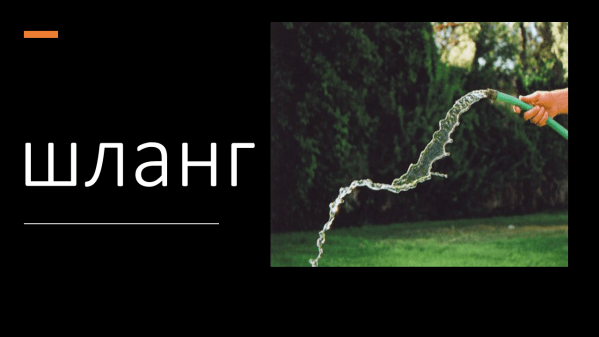
The word for hose in Russian is “schlang”. When the short, stout Irina Leikina was addressing us in her mad bursts of Muscovite Russian, she demonstrated with her flying hands.

“And my son,” she bellowed. “He was pouring water out of the schlanga–” She gesticulated towards her groin, as if she were her tall, half Slavic half Jewish son, pouring water from a hose, at waist height.

The room erupted in laughter. She stopped abruptly, her dark eyebrows waggling, looking at each of us in turn. Black Navy uniforms, green for Army, light blue Air Force. Nearly everyone in the room was male, except for me and an Army Specialist sitting kitty-corner to me at the tables placed around the room.

“Vat is so funny?” She asked us in her sparse, heavily accented English. 

Don, whose last name I can’t remember, the highest ranking person in the room, a Warrant Officer, also the oldest, with a wife and kids already, spoke to her gently.

“The word schlong in English,” he said, face composed and only slightly pinking up, unlike that of the two blondish army guys giggling on either side of him, “the word schlong, is a slang word for penis in America–and you were gesturing at your, you know–” Don looked pointedly at Gospozha Leikina’s groin.

Her round face immediately bloomed into a deep red.

“It is German word.” She breathed heavily. “It is, word for–”  She looked at Don again. 

“Yes, yes it is, “ he said.  “It just sounds funny to us Americans.”

“Ah, I see.” Gospozha Leikina paused for a moment and wiped the sweat off her brow, turned to the chalkboard and began to write words with force and motion. She wrote the cursive heavily looped word SHLANG across the green board in white, then wrote an example of how to use the word properly, in any of the 8 cases that typically baffled native English speakers.

“Genitive case,” she said. VODA IZ SHLANGA. Water comes from hose. How do you say?” 

“Water from a hose.” Don nodded. “That’s how you say it.”

Gospozha Leikina nodded.

We turned back to our rapid note-taking, as she barrelled on, filling the board with words and phrases we had no idea we’d ever use.

Plated

The Russians have a saying I’ve always found amusing. Я не в своей тарелке (Ya ne v svoej tarelke) — I’m not on (in) my plate. When you’re not on your plate, you’re perhaps a little grumpy. Perhaps you’re not your usual self. Sometimes, on a good day, I like to say I’m ON my plate. Or mess around and say the plate’s broken so I can’t be on it or off it. It just is.

I’ve been off my plate frequently these last few months–mainly because the plate has changed. It’s not a shallow dinner soup plate any more. It’s a cracked, distorted plate with some shiny bits and some other parts that light shines through. This plate wobbles. It’s non-standard. It’s awkward. It’s not a plate I’d be on at all if it didn’t seem like I needed to be on a plate in the first place. So I generally have to adjust if I want to be on the plate. I can’t help but notice, however, that the longer I’m on the plate, the more comfortable it gets. Pretty soon it will become a standard plate.

Until they hand me a new one.

Website Powered by WordPress.com.

Up ↑