Thoughts on Russian Literature

It’s amazing what meeting new people can spark in our thinking. Recently I met a group of folks who are “into” Russian literature. I put quotes around the word “into” because it’s unusual, but also unlikely that being into Russian literature means going all the way down the rabbit hole and swimming in the well of the Russian Soul. Whatever that means. But I digress.

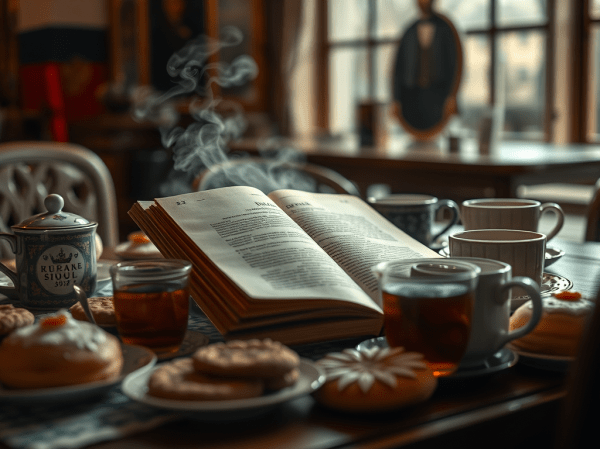
Being into Russian Literature in the United States means knowing who Dostoevsky was and secretly admiring the person who says they read Crime and Punishment and that it became their favorite book. Or perhaps being into Russian Literature means reading Anna Karenina because Oprah recommended it.  Perhaps it means consuming Tolstoy and blinchiki in some rainy café in New York. Or drinking tea and nibbling ponchiki while reading Turgenev and thinking about Nihilism.

These are all well and good, and generally, unusual practices.

But being into Russian Literature might also mean reading Bulgakov or Gogol or maybe even understanding that Pushkin is much more highly regarded than almost any classic author in Russia, primarily because of his poetry. Americans, as a rule, don’t have any idea who Pushkin was or why his poems and short stories are remarkable and beloved by many native Russian speakers. Being into Russian Literature might include a survey of Silver Age poets and imagining what life might have been like, surrounded by poets like Blok, Mandelshtam, Tsvetayeva, and one of my personal favorites, Anna Akhmatova.

But, yet again, I digress.

As a result of my recent conversations with folks who are into Russian Literature, I’ve decided to pick up Nikolai Vasilyevich Gogol’s book Dead Souls. I recall discussing this book in undergrad and maybe I Cliffs-noted it.

 I don’t recall, actually. I admit now, somewhat abashedly, that I skimmed over many books while in college that are considered groundbreaking and foundational to modern thinking. (Poetry was a different story. I read as much as I could.)

So, now that I am a grown up, I sent off to Amazon and ordered the  Richard Pevear and Larissa Volokhonsky  translation of Dead Souls. (*Note: Dead Souls has been translated into English at least eleven different times. Constance Garnett’s version is typically the most disseminated version. More on translation later.) Dead Souls is considered rather poetic, so what better way to reacquaint myself with the classics?

I also ordered the Russian language copy. I’m looking forward to diving into this reading / translation / critical assessment project. Why? Because I can. But also, in speaking with a person whose opinion I trust, I heard “Dead Souls is funny and sad, but extremely relevant to our modern times.” 

This was enough for me to jump “into” the book and back into Russian Literature.


Dead Souls, title page from 1842, from Wikipedia


The Value of PTSD

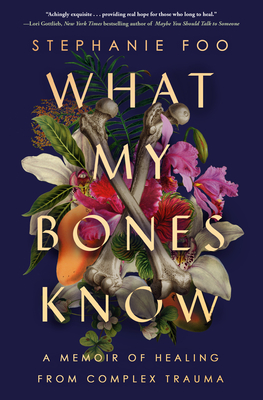
“I was made for this moment. [Dr. Hom] would tell me that PTSD is only a mental illness in times of peace. The whole point of PTSD is to prepare you for being on the verge of death at any moment.”

–Stephanie Foo, What My Bones Know: A Memoir of Healing from Complex Trauma

I confess, this memoir was horrible and enlightening at the same time. I started reading the book and then found I couldn’t keep going (trigger warning — if you have cPTSD you may also have issues). So I ended up getting a copy of the Audible version. It took me awhile to listen to the book as some parts were too intense.

Ms. Foo is a vivid storyteller, and in the Audible version, you can hear her family come through in the phrases she uses. I felt like I met many of her family members as she explored her past.

I appreciated the experimentation and review of all things related to healing complex trauma. This is a down to earth, real human approach to healing. Or at least to living a better life.

Notwithstanding the intensity of the abuse described in the book, quite a bit of it was enlightening, especially some of the therapeutic observations and the way cPTSD survivors deal with traumatic situations later in life (like COVID lockdowns, etc.).

I would knock the score down from 5 stars just a bit because the author’s political bias came out a few times. It was expected, considering where she grew up, and not too overwhelming, so I was able to keep reading/listening.

Recommended. Especially if you’re working through cPTSD or if you love someone with the diagnosis or who is likely to have cPTSD, based on their upbringing.


Rating: 5 out of 5.

Last Year’s Books

I’ve been meaning to write about the books I read in 2022. Here it is already half through 2023, so you can see I’m a little bit behind in my execution.

I track my books in Goodreads and I usually rate and review them. On a very rare occasion I might not post a review, but it is often because I may know the author. Or I just haven’t gotten around to it (like posting book reviews from last year!).

I read 103 books last year, when I was aiming for a “modest” 62. Of course, some of the books were small, but hey, a book is a book. Here’s a few of my discoveries last year.

I discovered James Patterson’s Book Shots. First, I’ve never really read James Patterson although of course I know who he is. The Book Shots were a perfect, engaging length. I don’t like extended stress, although my usual selection of books (mysteries, true crime, etc.) would lead you to believe otherwise.


I still enjoy murder mysteries set in the last century, often in England during WWII or earlier. If there’s a woman breaking the rules and investigating, I usually enjoy those. Strong willed women bucking society. Yes, that’s what I like to see. New to me authors were Ashley Weaver and Alison Montclair.

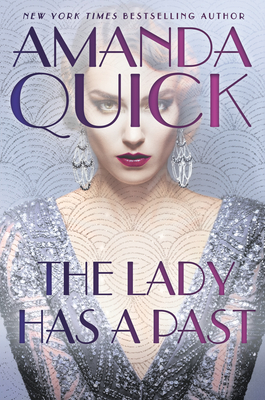
I also got caught up on a few Victoria Laurie books, and dived into Jayne Ann Krentz AKA Amanda Quick. Her psychic mystery/thriller books were fun. I note I am not reading a lot of them this year, as I think I figured out the formula after reading many of them last year.

Another fun foray was this interesting trend of Amish murder mysteries or Amish romances. I’m not sure why they are so popular, but they’re intriguing, perhaps, as there is the familiarity of other humans, but a completely different set of rules and expectations. Perhaps that is why they are so fun to read.

Escapism at its finest.

I’ve already read 44 books in 2023. Many of them are non-fiction rah-rah motivational books. Much needed, I suppose, as we recover from pandemic lockdowns.

I’ll be posting a few reviews as we move further into the year. Until then, happy reading!


Related Posts

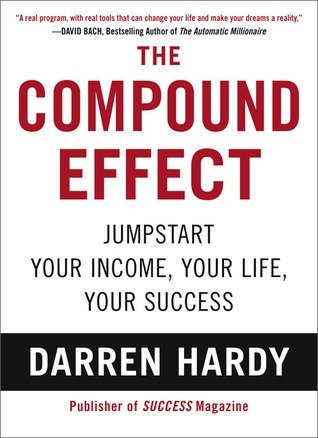
The Compound Effect by Darren Hardy

Have you had trouble achieving a long term goal? I have definitely dealt with setbacks in at least three of my longer term goals. I think it might come down to consistency. As in consistent actions adding up to long term results.

This book was first recommended to me in a group I attend related to mindset. The presenter discussed the idea of compound interest and related it to progress on our goals. She mentioned this book. I got myself a copy from the library.

I read my library copy fairly quickly — which is not typical when I am reading a non-fiction, self-help book. This may be an older book as far as some of the examples in it, but the concepts are timeless. I particularly appreciated the conversational style and the focus on small changes that add up to long term success and good health.

In fact, I liked the book so much I bought a few copies to read with my children.

Our weekly family book group is almost done with this book, and the lessons have been helpful. Even the 11 year old has learned a few things about consistent effort and how external things influence us.


Rating: 5 out of 5.

I gave it a five star rating for the plain writing, ease of use, and practical tips and to-dos.

Recommended if you need a dose of motivation with some very practical steps for how to apply the advice.


Related Posts

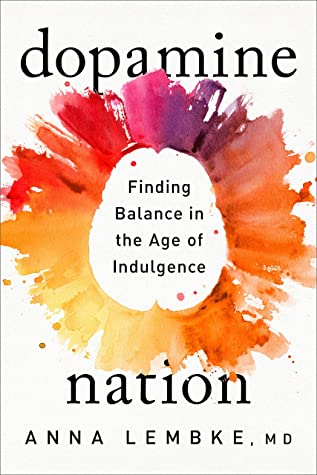
Dopamine Nation by Anna Lembke, MD

From GoodReads about Dopamine Nation: Finding Balance in the Age of Indulgence:

This book is about pleasure. It’s also about pain. Most important, it’s about how to find the delicate balance between the two, and why now more than ever finding balance is essential. We’re living in a time of unprecedented access to high-reward, high-dopamine stimuli: drugs, food, news, gambling, shopping, gaming, texting, sexting, Facebooking, Instagramming, YouTubing, tweeting… The increased numbers, variety, and potency is staggering. The smartphone is the modern-day hypodermic needle, delivering digital dopamine 24/7 for a wired generation. As such we’ve all become vulnerable to compulsive overconsumption.

How could anyone not want to read further?

What I liked most about this book was that it is accessible to the layperson and highly readable. If you like the super-sciency type book that goes on for days with hard-to-decipher examples, you may not like this book. It may be “too simple” for you.

I felt like it was a long conversation with someone who has expertise in the field, but who is a regular human being. (Dr. Lembke shows us her own weaknesses rather frequently in the book.) I found lots of interest in this book, and just enough science to back it up. I kept reading.

It even kept me away from obsessive social media scrolling…or maybe not? Note: this was a joke. But actually, it did make me rethink my online activities.

It was a good read. Recommended.

Rating: 4 out of 5.

Related Posts

The Body Papers by Grace Talusan

An excerpt from the Goodreads description: Born in the Philippines, young Grace Talusan moves with her family to a New England suburb in the 1970s. At school, she confronts racism as one of the few kids with a brown face. At home, the confusion is worse: her grandfather’s nightly visits to her room leave her hurt and terrified, and she learns to build a protective wall of silence that maps onto the larger silence practiced by her Catholic Filipino family.

It’s rare that I read a memoir so quickly, and rare that I’m emotionally affected by the narrator’s life. The Body Papers by Grace Talusan hit both.

The pacing was brisk, the images vivid. Grace Talusan connects us with her story and what it was like to grow up in one of two Filipino families in a small town in Massachusetts. We travel back to the Philippines with Grace when she’s an adult and see the country through her eyes. This book was better and more vivid than any movie.

She also shares her childhood trauma with us in a way that is relatable and poignant.

Recommended. 5/5 stars.

Rating: 5 out of 5.

Related Posts

Website Powered by WordPress.com.

Up ↑